
Government
City leaders pay tribute to fallen North Royalton firefighter
By Darnell Lewis
Advertisement · Why this ad?
Mark Chen is a reporter specializing in local and state government, bringing over 6 years of experience in investigative journalism. A graduate of Case Western Reserve University, Mark has contributed to Cleveland's Plain Dealer before starting his role at Toledo Current. His work often focuses on transparency and accountability in local governance.
More from Mark →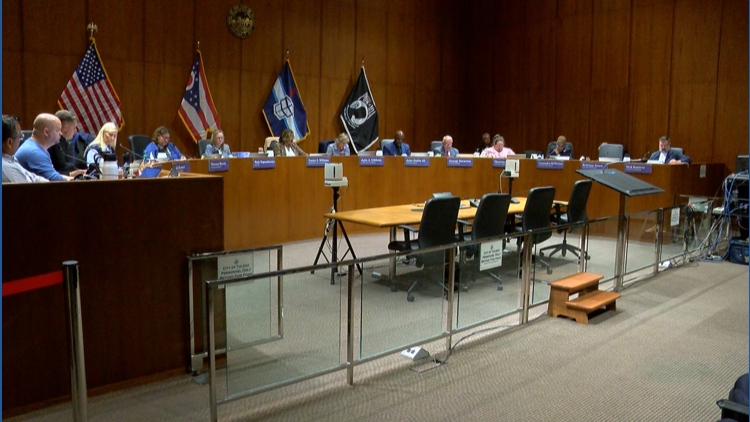
In a tense meeting that echoed through the halls of Toledo's City Hall, the atmosphere was charged with anticipation as residents and council members gathered to discuss the future of the Flock camera system. The cameras, designed to enhance public safety and security, have become a focal point of debate in the city. As the clock ticked down, the council faced a critical decision that could shape the landscape of law enforcement in Toledo.
During a recent city council meeting, a resolution aimed at terminating the Flock camera program was brought to the floor. The council was deadlocked at 6-6, leaving Mayor Wade Kapszukiewicz in a pivotal position to cast the deciding vote. The Flock system, which utilizes license plate recognition technology, has been under scrutiny for its implications on privacy and civil liberties.
The resolution's proponents argued that the cameras infringe on individual rights and have not significantly contributed to reducing crime rates in the city. On the other hand, supporters of the Flock program contend that the technology has proven to be an invaluable tool for law enforcement, helping to solve crimes and enhance community safety.
As the meeting unfolded, various council members expressed their views, highlighting a divide that reflects broader national conversations about surveillance and public safety. The council's decision on this matter is not just about cameras; it signifies a deeper philosophical debate about the balance between security and privacy in modern society.
The community's response to the council's deadlock has been mixed. Many residents voiced their concerns during the public comment period, with some expressing support for the Flock program as a necessary measure to combat rising crime rates. Others, however, articulated fears about the potential for abuse of surveillance technology.
Local resident Sarah Thompson, a mother of two, shared her perspective: "I want to feel safe in my neighborhood, and I believe that the Flock cameras help deter crime. But I also worry about how this information is used and who has access to it." Her sentiments echo a common theme among residents who are caught between the desire for safety and the need for privacy.
Another resident, John Miller, a small business owner in the area, expressed a different viewpoint. He stated, "As someone who has experienced theft in my store, I see the value in having these cameras. They provide a sense of security that allows me to focus on running my business rather than worrying about crime. However, I understand the concerns about privacy and want to ensure there are checks in place to protect our rights." This highlights the complex nature of the debate, as residents grapple with the dual needs for safety and privacy.
Council member Matt Cherry, who voted against the resolution, stated, "We need to embrace technology that aids our police force. These cameras have helped solve numerous cases, and getting rid of them would be a step backward for public safety." His comments reflect a growing trend among law enforcement agencies nationwide that view such technology as essential in the fight against crime.
Conversely, Council member Teresa Fedor articulated her concerns, saying, "While I understand the need for safety, we must also protect our citizens' rights. We cannot allow surveillance to become the norm in our everyday lives." This dichotomy of opinions illustrates the complexities of governance in an era where technology is advancing faster than legislation can keep pace.
With Mayor Kapszukiewicz poised to cast the deciding vote, the future of the Flock camera program hangs in the balance. Should he choose to support the resolution, it would mark a significant shift in how Toledo approaches public safety technology. Alternatively, if he votes against it, the program will continue to operate, further entrenching surveillance as a facet of daily life in the city.
The impending decision has sparked discussions among community leaders and advocacy groups who are now mobilizing to either support or oppose the Flock cameras. Organizations such as the Toledo Chapter of the American Civil Liberties Union have already begun to rally support for a more comprehensive review of surveillance policies in the city.
In the days leading up to the mayor's decision, community forums are being organized where residents can express their views directly to council members and law enforcement representatives. These meetings aim to foster open dialogue and provide a platform for citizens to voice their concerns and suggestions regarding the Flock system.
The outcome of this council meeting could set a precedent for other cities grappling with similar issues. As technology continues to evolve, municipalities across the country are faced with the challenge of balancing public safety with the protection of civil liberties. The Toledo council's decision could serve as a case study for other regions considering similar surveillance measures.
Experts in law enforcement and civil rights have weighed in on the matter, emphasizing that Toledo's decision could influence how other cities approach surveillance technology. Dr. Emily Johnson, a professor of criminal justice at the University of Toledo, noted, "This is not just a Toledo issue; it's a national conversation. How we handle surveillance technology today will impact future policies and community trust in law enforcement."
As discussions continue, residents are encouraged to engage with their local representatives and voice their opinions on the matter. The council's deliberation is not just about the Flock cameras; it is about the kind of community Toledo wants to be—one that prioritizes safety without sacrificing the fundamental rights of its citizens.
Residents interested in learning more about the Flock camera program and its implications can access resources from the Toledo Police Department and local advocacy organizations. The City of Toledo's official website provides information on public safety initiatives and community resources. Additionally, the American Civil Liberties Union offers insights into civil rights and surveillance issues that are crucial for informed community engagement.
Moreover, local community forums and town hall meetings are excellent venues for residents to express their views and engage in meaningful dialogue with council members. These platforms ensure that the voices of Toledo's citizens are heard in the decision-making process.
The Toledo City Council's decision regarding the Flock camera program is more than just a vote; it is a reflection of the values and priorities of the community. As the council prepares for what could be a transformative decision, it is essential for residents to remain informed and involved. This is a pivotal moment for Toledo, where the intersection of technology and civil rights is being scrutinized.
As the city looks ahead, the hope is that whatever decision is made will foster a sense of security while ensuring that the rights of individuals are not compromised. The ongoing dialogue within the community serves as a testament to Toledo's commitment to balancing safety with fundamental freedoms, a principle that must be upheld as the city navigates its future.
Ultimately, the decision regarding the Flock camera system is not just about technology; it is about shaping the future of community trust and engagement between residents and law enforcement. As Toledo navigates this critical juncture, the collective voice of its citizens will play a vital role in determining the path forward.
By Darnell Lewis

By Mark Johnson

By Mark Chen

By Rachel Thompson